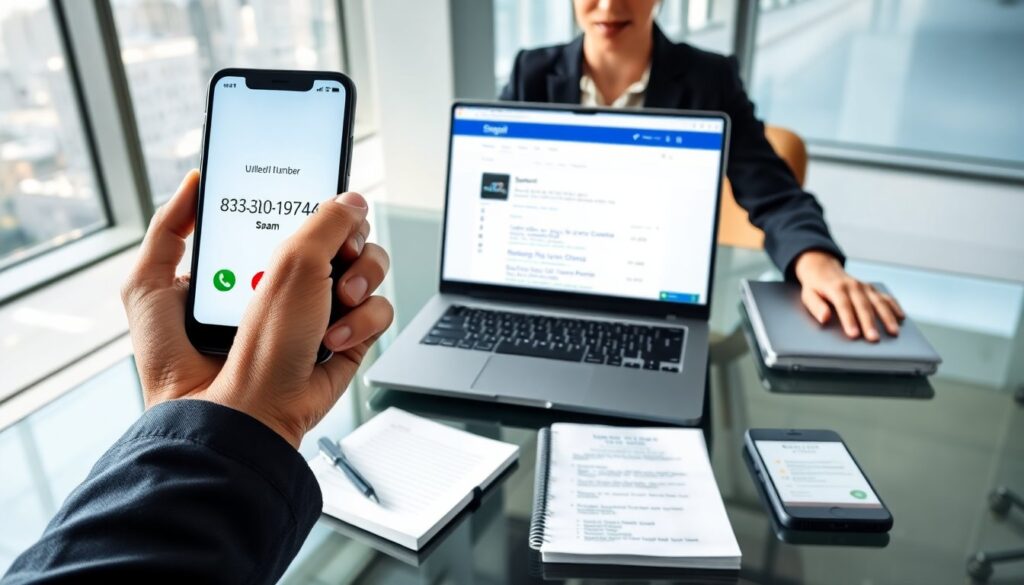

8335201984 appears on many phones in 2026 and prompts questions. The reader sees the number and wants facts. This introduction gives clear purpose: explain what the number is, how people report it, how to verify it, and how to stay safe.
Table of Contents
ToggleKey Takeaways
- 833‑520‑1984 is a toll-free number commonly used by businesses but can also be exploited by scammers to mask their origin.
- Users report mixed experiences with 833‑520‑1984, ranging from legitimate customer service to robocalls and scams requesting personal information or payments.
- To verify 833‑520‑1984, use reverse lookup tools, check complaint sites, and confirm the number on official business websites before responding.
- Common scam tactics linked to toll-free numbers like 833‑520‑1984 include urgent calls pressuring for payments, requests for login credentials, and spoofed caller IDs.
- Protect yourself by blocking the number, using call-filtering apps, reviewing voicemails before returning calls, and registering on the Do Not Call list.
- Report suspicious calls from 833‑520‑1984 to the FTC, FCC, state attorney general, and local law enforcement if financial loss occurs.
What Is 833‑520‑1984? Toll‑Free Basics And Why The Number Appears On Your Phone
833‑520‑1984 is a toll‑free number registered in the 833 code range. The carrier assigns numbers in that range for businesses and services. Callers use toll‑free numbers to reach customers without charge. The number appears on phones for several reasons. A business may place an automated call. A legitimate call center may use it for customer service. Scammers may use it to mask their origin. People see the number during incoming calls, missed‑call logs, and in caller ID apps. They may also see it in text messages when services send automated alerts. If someone sees 833‑520‑1984 repeatedly, they should treat the calls as unknown until they verify the source.
Reported Caller Behavior, Complaints, And Online Mentions
Consumers report mixed behavior tied to 833‑520‑1984. Some report legitimate customer service interactions. Others report robocalls that disconnect or push prompts. Complaint platforms show entries that link 833‑520‑1984 to survey requests, purported refunds, and fake account alerts. Reviewers often say the calls arrive at odd hours. Posters on forums share call transcripts and recordings. Some posts label the number as a nuisance. Agencies such as the FTC list similar patterns for toll‑free scam calls. Those patterns include pressure to act, requests for payment, and attempts to collect personal data. Community reports can help identify trends, but they do not prove intent for a single call.
How To Verify 833‑520‑1984: Reverse Lookup Tools And Search Strategies
A user can verify 833‑520‑1984 with simple tools. A reverse phone lookup often shows the business name or carrier. Search engines index forums, complaint sites, and company pages that mention the number. Caller ID apps may flag the number as spam or safe based on crowdsourced data. The user should check multiple sources before deciding. If a site links 833‑520‑1984 to scams, the user should weigh the number of independent reports. If a business page lists the number, the user should confirm that the page uses secure contact methods. Verification often requires cross‑checking phone, web, and regulatory data.
Quick Verification Steps You Can Do Now
Search the exact number in quotes to find precise mentions. Use a reverse lookup service and note the listed owner. Check the business website for the number and compare domain details. Look up recent complaints on consumer sites. Play back any recorded voicemail slowly for request details. Do not share account numbers, passwords, or one‑time codes. If the caller claims to be from a bank or government, hang up and call the official number on your statement. Document the call time, content, and caller prompts. These steps help the user decide if 833‑520‑1984 is safe.
Common Scam Tactics Associated With Toll‑Free Numbers
Scammers use toll‑free numbers like 833‑520‑1984 to sound legitimate. They play recordings that ask the recipient to press buttons. They claim to offer refunds, prizes, or urgent account fixes. They ask for payment via gift cards, wire transfers, or cryptocurrencies. They request verification codes or login credentials. They spoof caller ID to show trusted institutions. They ask to install remote access software. They create urgency to reduce thinking time. Each tactic aims to obtain money or access. Recognizing these tactics helps the reader reject fraudulent requests tied to 833‑520‑1984 or similar numbers.
Practical Steps To Protect Yourself And How To Report The Number
The reader can block 833‑520‑1984 on their device and carrier. They can enable call‑filtering apps that screen toll‑free calls. They can set voicemail to record unknown callers and check messages before calling back. They can register their number on the national Do Not Call list to reduce telemarketing. They can report 833‑520‑1984 to the Federal Trade Commission and to the Federal Communications Commission if the call violates rules. They can file a complaint with their state attorney general. If the call involves financial loss, they can report to local law enforcement and their bank. Keeping records of times, content, and any messages helps investigators.